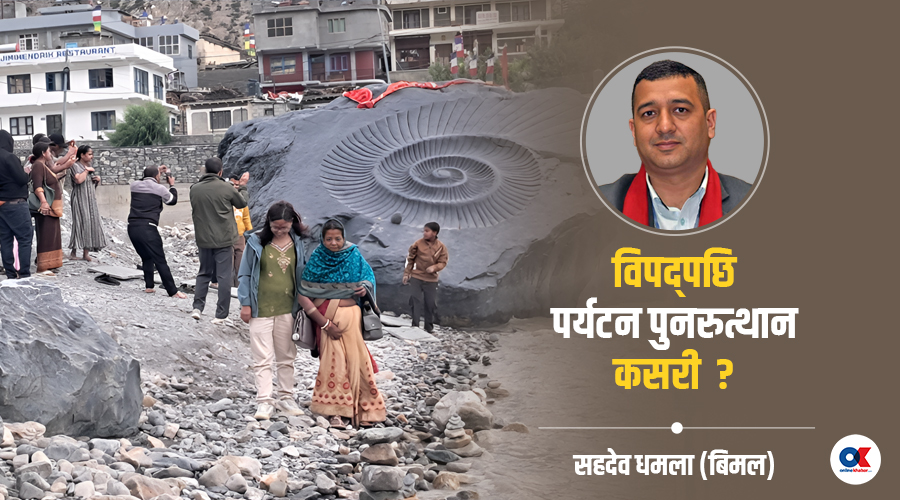
Nepal's tourism revival begins with the citizens here. With every damaged bridge, disrupted journey and canceled booking, lives are linked to families whose livelihoods depend on travel, hospitality and trust.
After a devastating flood, our first responsibility is to support the affected communities while maintaining their dignity and respect. The next responsibility is to restore opportunities and ensure that regeneration builds a stronger foundation for the future.
Tourism can make a meaningful contribution to this endeavour. Each returning tourist creates work for guides, drivers, hotel staff, farmers, artisans and small shopkeepers. But inviting tourists back also comes with responsibility. Our welcome must be based on reliable information, operational services and a serious commitment to security.
There are solid grounds for optimism. According to government statistics, 11 lakh 47 thousand 548 international tourists came to Nepal in 2024. This is an increase of about 13.1 percent compared to 1 million 14 thousand 882 in 2023. The 2024 arrivals were about 95.9 percent of the 11,97,191 recorded in 2019. These historical figures show Nepal's ability to restore tourism demand; They do not confirm that they have recovered from the current flood.
The next task is to turn this resurgence into coordinated action. The proposals presented here are adapted to Nepal's context from the established 10-step revitalization marketing framework contained in the report of the Nepal Tourism Accelerated Revitalization Task Force. Reconstruction should improve destination quality, strengthen businesses and reduce future risks.
1. Clear and responsible messaging
Our initial message should be one of confidence. Nepal welcomes tourists, and where communities and services are ready, tourism can support revitalization. It is a sad situation that when the loss of one place is presented as the situation of the entire country, another destination that is in operation has to lose all the tourists. Therefore, there is a need to spread the message internationally that our other destinations are safer, safer and more exciting.
For this, domestic tourists, international guests who visit Nepal repeatedly and well-wishers of Nepal can become initial partners in revival. Their visit should support local businesses and honor the spirit of communities still dealing with the loss. The jobs it creates, responsible spending and lasting relationships can bolster their confidence.
2. Prioritize proven facts over propaganda commitments
Travelers need practical answers - which roads can be traveled?, which footpaths have been inspected?, are bridges, accommodation, communication and emergency arrangements operational?
Coordinated information service after receiving information from local government, transportation businessmen, guides and related technical bodies should publish updated details with clear date and location through Nepal Tourism Board, Department of Tourism and Ministry of Tourism and each detail should show a clear harmony between the services confirmed to operate and the initial plan.
Honest information about restrictions and limitations builds trust and tourists can tailor their travel plans if they have clear options and reliable advice.
3. Building partnerships to share the benefits of regeneration
No single hotel, tour company or transport operator can revive a destination alone. The tourist experience is linked to various travel services, and a poor service can affect the overall experience.
Nepal Tourism Board, provincial and local governments, professional associations and community representatives should coordinate practical partnerships at the destination level. Accommodation, restaurants, transport operators, guides and operators of tourist attractions can create joint packages and exchange verified information.
The revitalization package should provide for procurement of local produce, employment of local guides, and inclusion of village businesses with appropriate access. Joint promotions can reduce individual expenses. Common standards can improve service.
4. Restore confidence in international markets
Trust is enhanced when a trusted person can articulate the situation they have directly examined. Well-organized visits by YouTubers, journalists, trekking companies, transporters and responsible tour operators can help the foreign market understand the real situation.
Overseas representatives need consistent information, recent photos and clear booking conditions. The operator should give reasonable options to the tourists to postpone the trip or change the program. Travelers who are treated fairly during times of uncertainty may return later and recommend Nepal to others. The value of trust gained through flexible behavior can be more long-term than a single booking lost immediately.
5. Learning from the revival of other countries
International experience provides excitement and useful learning if comparisons are realistic. According to the Tourism Authority of Sri Lanka, there were 2 million 53 thousand 465 tourists in 2024. This is an increase of 38.07 percent compared to 14 lakh 87 thousand 303 in 2023. This suggests that tourism demand may return strongly after the disruption, but this data is not evidence of a subsequent 2025 post-flood recovery.
Nepal should also study the response after the floods in India and the earthquake in Turkey in 2023. The objective is practical learning. Identify how organizations coordinated, how affected businesses received support, and how the benefits of recovery reached communities.
6. Maintaining business viability with booking incentives
Economically viable enterprises are essential for revival. Excessive price cuts may attract attention, but they can also leave a business unable to pay employees, repair equipment, or invest in renovations.
For example, a business earns Rs 10,000 from bookings and the related expenses are Rs 8,000, leaving Rs 2,000. If the cost remains the same, if a 20 percent discount is given, that amount is completely wiped out.
Instead, it may be more sustainable to add useful services such as heritage tours with local guides or organized transportation. But each proposal requires a cost calculation. Marketing is more effective when a business has the financial ability to deliver the experience it promises.
7. Improving the tourist experience through reconstruction
Recovery provides an opportunity to address weaknesses that existed before the disaster. Good drainage and drainage, inspected bridges and river crossings, clear signage, reliable communications and trained staff can increase both tourist confidence and community well-being.
Digital mapping and periodic photographs of the same location help record damage and repairs. Infrastructure decisions should be based on technical surveys in areas where property is at risk from river erosion, unstable slopes, or runoff with geogranes.
Nepal can also place more importance on cultural learning, village hospitality viewing, health and fitness and longer stays in suitable destinations. These experiences can expand opportunities beyond some highly publicized paths. The strongest new image is created by improvements that tourists can directly experience.
8. Promote local importance
A memorable reception doesn't need to cost a fortune. Traditional food, small locally made gifts or a walking tour of a village can deepen a tourist's connection with Nepal. Clarify what is included in the package and ensure that participating workers are paid fairly. Experience provided for free should not depend on the unpaid labor of locals.
Suitable offers for domestic tourists with convenient short tours and transparent transport arrangements are essential. International tourists may value flexible schedules and assistance in selecting appropriate routes more than advertised low prices. Good incentives encourage tourists to stay longer, learn more and spend in different businesses. Its real value lies in the quality of relationships it builds.
9. Presenting stories of progress with evidence
Positive communication is essential, but its strongest foundation is actual achievement—a bridge reopening after an inspection, a lodge welcoming guests again, a guide returning to work, or a community restoring an important cultural site.
Revealing dates and locations in videos and pictures, describing specific experiences with tourist feedback, comparing past and present conditions to clarify what has improved and what remains to be done, and re-opening programs can draw attention to a destination as community support and services are prepared.
Celebrity tours can be useful, but the detailed experiences of ordinary travelers are just as effective. The contribution of local workers, volunteers and people in the public service should be recognized in the regeneration news. Their patient work gives a real basis to the optimistic image that Nepal presents abroad.
10. Progress measurement and accountability
The number of tourist arrivals alone does not indicate whether the benefits of rehabilitation have reached the affected families. Monitoring should include reopened businesses, restored jobs, housing occupancy rates, tourist spending, local purchases and essential access routes.
A practical program should provide for reviews at 30, 60 and 90 days, each review should clarify the work completed, obstacles to be resolved, the responsible agency and the next priority. Public reporting helps businesses plan and communities understand whether commitments are being met. Evidence of progress can then provide a credible basis for marketing.
Finally, Nepal has shown a remarkable ability to welcome back tourists even after serious setbacks. International tourist arrivals increased from 150,962 in 2021 to over 1140,000 in 2024. The resurgence of travel, entrepreneurship and the continued attraction of Nepal made that revival possible. We can draw strength from that experience by accepting the work that remains to be done.
Our mountains, vibrant culture and hospitality are still the deep attractions of visiting Nepal. Through coordinated leadership, honest communication and investment in communities, tourism can restore livelihoods and trust. The most credible invitation we can give is to a Nepal that warmly welcomes, carefully prepares and equitably shares the rewards of revival.
(Dhamla is a member of Nepal Tourism Board and coordinator of Bhotekoshi Flood and Recovery Rapid Response Team.)
Dhamala is a tourism businessman.