5 November, Surkhet. High mountains all around, a wide valley in the middle, traditional houses made of stone and mud, Buddhist flags flying on the roofs and peaceful atmosphere. Dho village of Upper Dolpa is not an ordinary Himalayan settlement with its unique beauty of nature and original Tibetan culture. It is a village with a long legacy of history, religion, culture, trade and civilization.
It is the administrative center of Dho Rural Municipality in Dolpobuddha Rural Municipality-1 of Upper Dolpa. This settlement at an altitude of about 4000 meters above sea level is one of the important settlements of Dho-Tarap Valley. Once known as the administrative center of Upper Dolpa, Dho has become the center of commercial and social activities of the region.
Deprived of state services, facilities and infrastructure for a long time due to geographical difficulties, this village has now started to see new possibilities of development, says local social worker Gyalpo Bhote. Preparations are being made to establish an area administration office here, while the Nepali Army has proceeded with road construction from Dho area towards Upper Dolpa. These efforts are expected to add a new chapter to the modern development along with the historical significance of Dho.
Identity carried by history
The history of Dolpo region is connected with Himalayan civilization, Tibetan cultural influence and Buddhism and Bon religion. It has a long history as an important area of geographical and cultural contact between Nepal and Tibet.
In different periods of history, the settlements of Dolpo were run by their own traditional social structure and local leadership system. According to Bhote, the religious, cultural and commercial relations with Tibet played an important role in building the lifestyle here.
Dolpo was once part of a traditional trade route connecting Tibet. Materials such as salt and grain were transported through herds of yaks, chawri and other animals. The salt brought from Tibet reached the mountainous region of Nepal, and from here grain and other materials were sent to Tibet. This commercial relationship made Dho-Tarap area economically and socially important. It is mentioned in various historical and regional accounts that Dho-Tarap was once the administrative center of Upper Dolpa. Now, becoming the center of Dolpobuddha Rural Municipality, Dho is continuing its old administrative identity through a new structure.
A living museum of original culture and religious heritage
Another important identity of Dho is its original culture. The Tibetan civilization has a deep influence on the language, dress, food, lifestyle and religious traditions of the inhabitants here.
Traditions of Buddhism and ancient Bon religion have been alive here for generations. Monasteries, manes, stupas, prayer wheels and religious paintings around the village have formed the cultural identity of this region.
Religious faith is intertwined with the daily life of people here. Prayers, religious rituals, monastery activities and festivals from morning to evening keep the social life of the village alive.
Dho-Tarap area monasteries are not only places of worship, they are also important records of history, knowledge, art and civilization here. If the local religious heritage can be protected, this area can be made an important destination for Buddhist and Bon cultural tourism.
Traditional festivals, horse races and archery competitions also make the cultural life of Dho-Tarap more colorful. Such original activities can become an attraction for tourists.
Geography: Hard mountain life and unique natural beauty
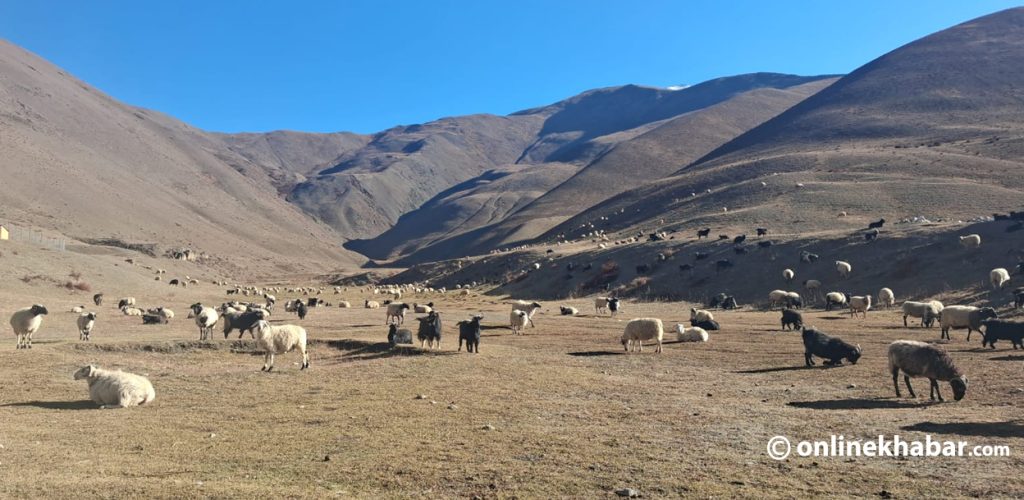
The geography of Dho is special in itself. Wide but high Himalayan valleys surrounded by high mountains, settlements spread along the river banks, grazing areas and arable land are the natural features here.
The Dho-Tarap valley, which includes settlements like Dho, Lang and Tokyu, is one of the human settlements in the high Himalayas of Nepal. It is mentioned that the height of Dho Basti is around 3,900 to 4,000 meters.
The weather here is very cold. People's life is not easy because they have to endure snow and harsh winter for a long time of the year. There is also limited time for farming. The local residents produce crops like barley, pea, potato and potato. Animal husbandry is another basis of traditional livelihood here. Village Vice President Pemma Dhorche Gurung said that raising yaks, chawri, sheep and goats sustains the local economy and lifestyle.
Short farming season, limited production, lack of transportation and long winter are the main challenges here. Living in this place made beautiful by nature is not easy.
Tourism potential: Many paths of Himalayan travel open from Dho
Due to its natural beauty, original culture, ancient monasteries and historical trade routes, Dho is an important destination from the point of view of tourism.
Dho-Tarap Valley is an area with special potential for hiking tourism. Tarap Valley can be reached by passing through the She-Foksundo area of Lower Dolpa and crossing the high Himalayan ridge of Bagalgada and Numla-Bagla. Similarly, the footpath leading to Dho through Jengla from Saldang and other settlements of Upper Dolpa is also popular. The footpath to Charka towards the east has the possibility of connecting this area with Mustang.
Tourists who come to Dho can experience the traditional settlements, monasteries, Himalayan agriculture system, animal husbandry and local lifestyle up close. According to Vice President Gurung, the religious and cultural heritage here is important for study, research and photography.
The attraction here for tourists is not limited to the natural scenery. The lifestyle, local dress, food, religious beliefs and community relations that have survived for hundreds of years have made Dhola a different tourist destination.
But for the promotion of tourism, systematic accommodation, communication, health services, rescue system, improvement of footpaths and tourist information system are necessary. When increasing tourist arrivals, attention should also be paid to the impact on local culture and environment.
From trading hubs to cross-border economic ties
Dho's identity is also connected with business. Historically, trade relations with Tibet had made the economy here viable. Exchange of salt, grain, animal products and daily consumables was the traditional business practice here.
Even now, Dho is an important trading center for the citizens of various settlements in Upper Dolpa. People from nearby settlements come here for trading of daily necessities, food and other essentials. The old social and commercial relations with Tibet have not been completely broken. This shows that the commercial importance of washing is not only limited to the local market but also linked to cross-border economic and social relations.
However, due to the lack of roads and transport, the transportation of goods is expensive and difficult. In many places, goods have to be transported using carts, horses, horses and yaks. It is affecting the price of daily consumer goods to the market of local products. Another important issue related to the future of DHO is administrative services and road infrastructure.
At present, preparations have been started to establish an area administration office here. After the establishment of the office, it is expected that the citizens of Upper Dolpa will have to go to the district headquarters Dunai to get citizenship, administrative recommendation and other government services. It will be a great achievement for them, who have to travel long distances even for general administrative work due to geographical difficulties, to get government services at the local level.
On the other hand, the Nepali Army has started road construction from Dho area towards Upper Dolpa. Road expansion has increased the possibility of connecting Dho with other settlements and external areas. After reaching the road, it can be expected that the transportation of food and construction materials will be easier, local products will get a market, it will be easier to transport patients to the hospital and help in tourism promotion.
Bhote says that in the name of expansion of roads and modern infrastructure, these heritages should be protected so that they are not damaged. He said that if local products, traditional skills, animal husbandry and cultural practices can be linked with tourism and market, the local community will get an opportunity to earn from their own resources.