
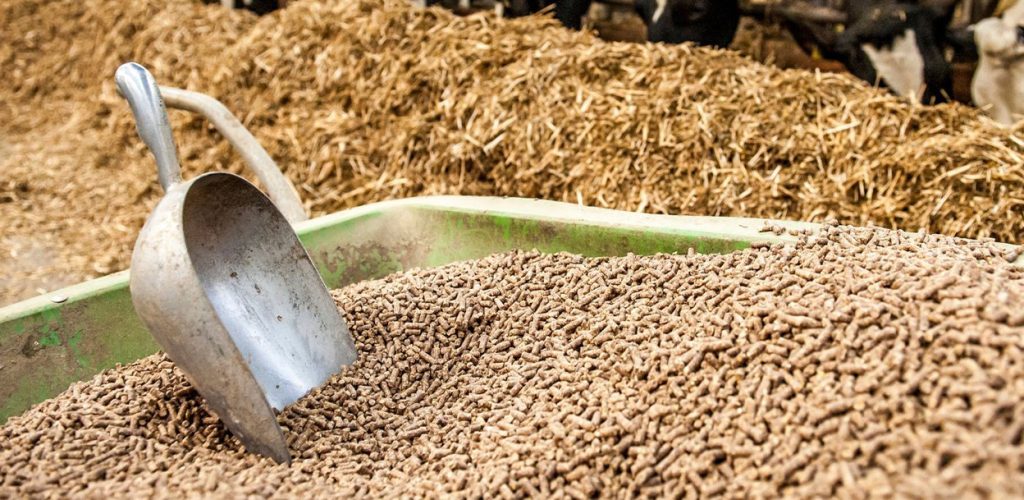
November 5, Kathmandu. The dairy farmers of Chitwan issued a statement on October 30 with a warning of road agitation, demanding that the price of milk should be raised to at least Rs. 75 per liter.
Disclosing the data of producing 3 lakh 55 thousand liters of milk daily and sending 55% of it to districts including Kathmandu, Lalitpur, Bhaktapur, Kaski and Makwanpur, Chitwan District Milk Producers Cooperative Association Limited has complained that even though the price of animal feed has gone up, according to the National Dairy Development Policy 2078, the price has not been reviewed every two years.
After this pressure, on Thursday, the Dairy Development Board held a discussion with farmers' representatives and dairy industry, but the price of milk has not been decided yet.
This problem is the same even in the chicken coop and hatchery industry. Farmers and industrialists who produce eggs, meat and chicks are complaining that they cannot afford the cost of production due to the increase in the price of feed.
From milk to eggs and meat, all the farmers are facing problems at once - the increase in the price of grains and its main raw materials, corn and soybeans.
Why did the price of grain increase?
According to Umeshchandra Sapkota, president of Nepal Grain Industry Association, 80 to 85 percent of the total raw materials required for making grain are corn and soybean products. Recently, the prices of both these items have increased in the international and regional markets.
"The main reason for the increase in the price of grain is corn and soybean raw materials, the prices of these items have increased by 15 to 20 percent," said President Sapkota, "but the price of grain has not increased in proportion to which the raw material has increased, so the grain industry is still at a loss."
According to Sapkota, maize which was previously priced at Rs 36 per kg has now reached around Rs 50. Similarly, the price of soybeans from India used to cost Rs 85 per kg, but now it has reached more than Rs 120.
Since it became expensive in India, Nepali industrialists were bringing cheap soybean pods from Bangladesh. After Bangladesh brought soybeans from America, after grinding them in mills and extracting oil, the pinna arrived in Nepal within seven days.
Bangladeshi Pina, which was sold earlier at Rs 80-82 per kg, is now coming at Rs 95-96. However, Sapkota said that the supply has also been stopped since Friday (today).
"Bangladesh has stopped selling soybeans from today, the mills there have said that they will no longer send them to Nepal," he said.
According to the statistics of the association, about 6.5 million to 7 million tons of corn is consumed annually in Nepal.
About 70 percent of it is produced locally, but the remaining 30 percent has to be imported from India. Around 3.5 million tons of soybeans used in feed should be imported 100% from abroad.
Sapkota said that it would take more than three months, i.e. 75 days, to buy corn or soybeans directly from the US due to the Gulf War. He said that it is not possible to bring corn from third countries as new corn will be produced in Nepal in March-May four months from now.
About 15 types of grains are produced in the market. Now the industry price (ex-factory) has reached 60 to 82 rupees per kg. After adding the shipping and dealer commission, the price of low-grade grain in the market has reached Rs 60-62 and high-grade grain has reached Rs 87-88 per kg.
Even for cattle, dairy farmers are also affected because they need to feed not only bran but also protein, calcium and phosphorus balanced feed.
Sapkota argues that the presence of depots and dealers in the middle is a practical necessity, as it becomes more expensive for small farmers to take one to two tons of grain directly from the industry by paying the vehicle fare.
"We have nothing in the hands of industrialists. We have to calculate the price of raw materials and sell them with a profit of 5, 10 or 20 paise," said Sapkota.
The impact of the increase in the price of raw materials has been seen from the chicken coop to the hatchery industry. According to Rajendra Lamichhane, president of Nepal Hatchery Industry Association, 80-85 percent of corn and soybeans, 90-95 percent of corn and soybeans, and 100 percent of other ingredients should be imported from outside.
He said that it is natural for the feed industry to increase the price of raw materials, but the farmers and hatchery industry have been affected by it.
According to the data given by Lamichhane, the production cost of broiler chicks has increased from 22 to 25 rupees per head and from 70-75 to 90 rupees.
Lamichhane said, "There was no talk of laying chicks until the farmer believed that it would make a profit, and there was no talk of hatcheries burying their chicks as soon as the farmers did not lay chicks."
Similarly, the production cost of layer chicks, which used to cost 125 rupees per head, has increased by 20-25 rupees and now it has reached 150 rupees.
The situation of egg and broiler farmers is also the same. Lamichhane said that the cost of egg production has increased by 2 to 3 rupees per crate due to the high price of feed, but due to lack of market demand, eggs were priced at 500 to 550 rupees per crate before Dasain-Tihar, but now they have dropped to less than 400.
In broiler chicken, the cost will be raised only if the farmer gets at least 230 to 235 rupees per kg. However, he says that there is no situation where the cost will rise due to the price reduction.
"Hatchery owners are also losing, egg producing farmers are also losing and broiler producing farmers are also losing - now everyone is in a state of loss," Lamichhane told Online Khabar.
Sapkota said that although grain is a non-perishable commodity, the farmers are forced to sell it cheaply because eggs and meat will rot and go to waste if not consumed at a certain time.
He said that for the past seven to eight to ten years, chicken meat has been below Rs 350 to Rs 400 per kg and the prices of eggs and milk have remained the same, but the price of grain has gone up.
Sapkota says that due to the migration of farmers, there is now a shortage of ghee, milk, curd and paneer in the market.
It may be more expensive for the consumer, but the farmer has to bear the cost! If the farmers get a little benefit, the business will run and the goods will be available in the market," Sapkota said. "In the current situation, the price of milk, meat and eggs must increase."
Cheap corn-soybeans in the world market, pressure in Asia
Nepali industrialists say that there is a problem of corn and soybeans in Ukraine, Europe, Turkey, Egypt and all over the world, but the latest data of the international market up to mid-November shows a mixed situation.
There was pressure on the global market in the middle of the year when the demand for meat, milk and eggs (animal protein) was increasing globally and corn-soybean (plant protein) production was limited. However, in November, the prices in markets such as America, Europe, Ukraine, Egypt and Turkey have decreased or remained stable.
According to the trading of November 19 and 20 in the American Commodity Exchange (CBOT), which is considered an international benchmark, the price of corn dropped to about 4.38 to 4.39 dollars per bushel (about 172 to 173 dollars per ton). This is the lowest level since last 14 weeks ie August. In the last four weeks, corn in the US market has fallen by more than 6 percent.
Soybean prices also decreased by about 3 percent in November to $12.07 to $12.09 per bushel (about $443 to $444 per ton).
Soybean pina per short ton (907 kg) has reached 332 to 336 dollars, that is, about 366 to 370 dollars per ton.
The US dollar has reached its strongest point in 19 months and Brazil has 78 percent of soybeans planted, and there are signs of easy supply. The export price of corn in Brazil is stable around 1,98 to 2,200 dollars per ton, while Argentina is forecast to produce 67 million tons of corn in the coming season.
Even in Ukraine and Europe, prices are now soft. Due to the delay in the corn harvest in Ukraine this year, only 56.2 percent of the crop has been received by November 16, and due to the lack of storage capacity and obstacles to export from the Black Sea port, corn is piling up in the domestic market.
Due to this, the export price of Ukrainian corn (Odessa FOB) fell from EUR 0.123 at the beginning of November to EUR 0.119 per kg.
Although dry weather in the European Union has reduced corn production by about 6.9 million tons (12 percent) this year, cheap supplies from Ukraine and sluggish demand for feed have pushed corn in November to 0.26 per kg in France from 0.27 and in Germany from 0.29 to 0.28 per kg.
Also in Egypt since October, with the easing of dollar management and customs clearance, the prices of yellow corn and soybean pina have decreased as corn has been imported from Brazil, Argentina, Ukraine, and the United States.
In Turkey, a record 23 million tons of wheat was produced and after the government grain agency opened the sale of grain wheat from the storage of more than 10 million tons, the active import of corn has been suspended until next February.
However, the situation is opposite in the Asian market. In Thailand, due to El-Nino and unfavorable weather conditions, the corn harvest was delayed due to lack of grain corn and the price exceeded the government target of $0.29 to close to $0.34 per kg. The industrialists there are demanding the government to relax the import restrictions.
In Bangladesh this year, the price of diesel has increased by 35 percent, due to the lack of cheap corn from India, reliance on expensive sea transportation from Brazil and the United States, and regional supply pressure, corn has become more expensive by about 24 percent and soybeans by 14 percent.
After the internal crisis escalated, when Bangladesh stopped sending soybean pods to Nepal, its impact on the Nepali industry will continue to be felt, industrialists say.
Ethanol policy and drought impact in India: How much is the price of milk and grain?
The prices of corn and soybeans in neighboring India, which has a direct impact on Nepal's corn and soybean market, have now reached a historic high.
According to the Animal Feed Manufacturers Association of India (CLFMA), the price of maize has risen by 30 to 40 percent in the last four to six weeks.
By the beginning of November, maize prices had reached between 31,000 and 36,000 baht per ton (31-36 per kg), while in major markets, it is trading at 27 to 30 per kg, well above the minimum support price (24.10 baht).
According to India's official Wholesale Price Index (WPI), the price of soybeans rose by 32 percent, pulses (except mustard) by 40 percent and rice husk by 21 percent in September compared to the previous year.
In addition to crop damage due to weak monsoons and drought, the Indian government began using large quantities of corn in the program to add 20 percent ethanol to gasoline (E20).
President Sapkota claims that some of Nepal's corn has also gone to India. After the increase in the price of soybeans in the domestic market of India, Indian businessmen have reduced exports and started importing soybeans from Africa instead.
The price of chicken feed has increased significantly in India due to the increase in the price of raw materials. By the third week of November, pre-starter grain of 50 kg bag in Mallapuram, Kerala has increased by 49 percent to 2,750 bharu from 1,850 bharu five months ago.
Similarly, the starter grain has increased from 1,900 to 2,715 pounds and the finisher grain has increased from 1,950 to 2,680 pounds. In India as a whole, branded layers feed is being traded at 25 to 46 Bharu per kg (mainly 30 to 38 Bharu i.e. 1,250 to 2,300 Bharu per 50 kg bag) in November.
Similarly, India's leading dairy brands have already increased the price of milk across the country in November due to the increase in grain, green and dry grass, packaging and transportation costs.
Karnataka's Nandini milk has increased the price of tone milk from 46 to 54 per liter by 8 per liter since November 1, of which 7 per liter will go directly to farmers (from 35 to 42 per liter and government incentives from 35 to 47 per liter) and 1 per liter will go to cooperatives.
Similarly, Amul and Mother Dairy have increased the price of milk by 2 to 4 per liter across the country since November 12.
In Delhi-NCR, Mother Dairy's tone milk (packet) has increased from 60 to 62 bharu, full cream from 72 to 76, cow's milk from 62 to 65 and double tone from 54 to 56 bharu.
Amul has also increased Amul Taza from 59 to 61 (an increase of 2) and Amul Gold from 72 to 76 (an increase of 4). Earlier, from September 1, wholesale buffalo milk in Mumbai was increased by 9 bharu to 102 bharu (retail 110 to 112 bharu) and in Tamil Nadu government procurement price was increased by 6 bharu, cow milk was 44 bharu and buffalo milk was fixed at 53 bharu per litre.
Kafle is a correspondent of the Business Bureau of Online Khabar.