It has been 32 years since the establishment of formal diplomatic relations between South Africa and Nepal, but the relationship between the two countries has been going on for much longer than that. Nepal played an important role in the struggle against apartheid in South Africa.
Nepal worked for 25 years as the vice-chairman of the United Nations Special Committee against Apartheid, through which Nelson Mandela himself mentioned his contribution to South Africa's anti-apartheid movement. This historical legacy remains the basis of bilateral relations even today.
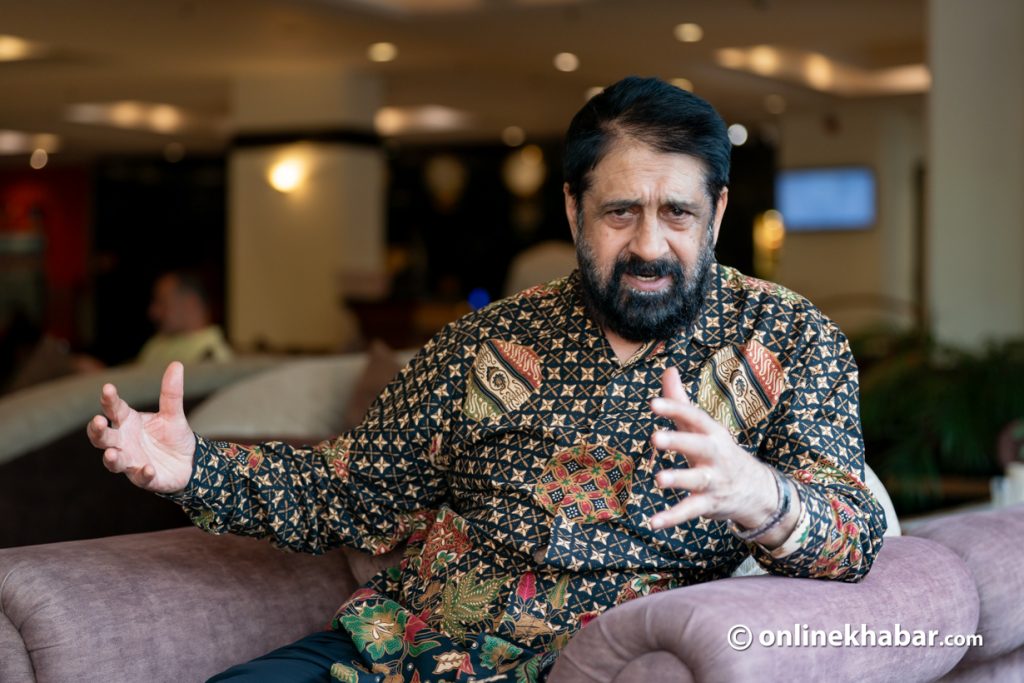
There is no South African embassy in Nepal. The South African High Commission in New Delhi is also looking at Nepal. Professor Anil Suklal, High Commissioner of South Africa based in Delhi, is leading the bilateral relations of the region by representing South Africa on a non-resident basis for Nepal and Bangladesh as well.
Following visits by South African officials in 2012 and 2015, the two countries held their first bilateral consultative meeting in Pretoria, South Africa in March 2022. Since then, both countries have been trying to transform diplomatic goodwill into practical cooperation. The Memorandum of Intent, signed in 2022, provides a basis for expanding economic diplomacy, promoting trade and investment, and strengthening technical cooperation.
With High Commissioner Suklal, who is currently on a visit to Nepal, Janardan Baral and Shashwat Pant discussed historical relations between Nepal and South Africa, possibilities of trade, investment and educational cooperation and shared priorities of both countries through multilateral platforms including BRICS and the United Nations Framework Convention on Climate Change (UNFCCC) for online news. Here is an edited excerpt of the conversation with him:
What is the purpose of your visit?
As you know, I have been appointed as South Africa's High Commissioner to Nepal. So I come here from time to time and discuss how we can strengthen our relationship. This collaboration should not be limited to the government level. We also aim to expand relationships with the business sector, civil society, academic community and think tanks.
The last four days spent in Kathmandu have been very productive. A new government has been formed in Nepal. So it was important to come here to get acquainted with the new administration and to discuss how to continue cooperation in the future. We are closely monitoring the developments in Nepal.
On behalf of the President of South Africa and the people of South Africa, we express our condolences for the tragic events that took place on August 26. As you know, six citizens of South Africa who were visiting Nepal were affected by the sudden flood. They are still missing. As High Commissioner I have been receiving many requests for information about their situation. Not only have those requests come from family members, but interest has also increased as the incident has been widely reported in South Africa. We would like to again express our condolences and solidarity with the Nepalese government and the Nepalese people.
In the last few days we had the opportunity to meet with the Foreign Secretary. He is a good friend of mine, as he previously served as Nepal's High Commissioner to South Africa. We have known each other since that time. In the meeting, we discussed how to strengthen cooperation with the Ministry of Foreign Affairs. The meeting with Foreign Minister Shishir Khanal was also very fruitful. We have invited him to visit South Africa to discuss ways to further strengthen the relationship between the two countries.
Now many may not know, Nepal played a very important role in the freedom struggle of South Africa. How do you see this historical relationship?
In 1962, the United Nations formed a special committee against apartheid and Nepal was a participant in that committee. From 1969 to the establishment of democracy in South Africa in 1994, Nepal served as vice-chairman for 25 years until the committee was disbanded. Therefore, Nepal was an important partner of the United Nations in raising its voice within the international system in favor of our freedom and democracy.
Nelson Mandela spoke about this after his release from prison. He expressed gratitude for the important role played by Nepal in the international system during the freedom struggle. The historical basis of our relationship is very strong.
In 1994, we established formal diplomatic relations. Our political relationship is very strong as we have been cooperating closely in multilateral fora under the United Nations. We are both vibrant democracies and believe in multilateralism and the United Nations system.
Similarly, advancing action on climate change is also a shared priority of ours. The melting of Himalayan glaciers and the effect it is having on Nepal is not caused by Nepal. Nepal's contribution to global carbon emissions is negligible, but Nepal is seriously suffering the effects of global warming. Therefore, it is important to continue cooperation under the United Nations Framework Convention on Climate Change (UNFCCC) with special emphasis on technology exchange for climate change mitigation and adaptation.
An equally important topic is disaster risk reduction. Global warming is causing sea levels to rise and climate change is affecting countries around the world. The flash floods that we are witnessing have a direct impact not only on human lives but also on other aspects of our lives including food security.
We have discussed how to strengthen cooperation on both bilateral and multilateral levels on these issues. Our views on these issues are largely the same. We are very positive about the meeting with the Ministry of Foreign Affairs and how the relations between the two countries can be advanced in the future.
2024 marks the 30th anniversary of the establishment of diplomatic relations between the two countries. However, bilateral trade and investment are still limited. What is the reason for the economic relationship not taking the expected speed?
I think the main reason for this is that although our historical relationship and government-to-government relationship is very strong, at the people level, especially among the private sector, we do not know enough about each other. This is the point I have been emphasizing. We should exchange trade delegations and identify three-four key areas for mutual benefit.
During this visit, we have identified some important areas in the meeting with the Minister of Industry, Commerce and Supply and the Nepal Chamber of Commerce.
The first sector is mining and minerals. While South Africa is the leading country in the mining industry, Nepal also has substantial mineral reserves, which are yet to be fully explored. South Africa has extensive experience in this area. We also have experience in the field of important minerals required for green technology.
The second area is infrastructure and information and communication technology. After the recent catastrophic events, there is a great need for infrastructure in Nepal for reconstruction and overall development. Nepal has skilled, young and educated manpower in new technology. On the other hand, Cape Town is developing as Africa's leading center for data processing, business process outsourcing (BPO) and new technologies. This creates a good opportunity for cooperation between the two countries.
A third area is agricultural produce processing, where South Africa has made significant progress. The final sector is tourism, which has great potential. Tourists come to see the natural beauty of Everest and Nepal. Similarly, Cape Town is also a very popular destination.
To transform these possibilities into practical steps, we have agreed to connect the professional women's branch of the Nepal Chamber of Commerce with the BRICS Women's Alliance of South Africa. Its objective is to expand the participation of women and youth in the micro, small and medium enterprise sector.
Similarly, it has been agreed to expand cooperation between Nepal Chamber of Commerce and South African Chamber of Commerce and Industry and to facilitate mutual visits of business delegations from both countries.
What other initiatives are being taken in the field of public and institutional relations?
We have had two very good meetings on expanding local and community relations.
Regarding expanding cooperation between cities, we met with the head of Kathmandu Metropolitan City. The possibility of establishing a sister city relationship between Kathmandu and Cape Town is being discussed. It would be natural and meaningful to expand cooperation between Kathmandu, which is close to Mount Everest, and Cape Town, which is located on the southern tip of the African continent.
Regarding civic organizations, I have met Rotary Club of Kathmandu. I have also contacted the Rotary Club of Cape Town to explore the possibility of establishing a sister relationship between the Rotary Clubs of Kathmandu and Cape Town as both organizations have a common interest in social upliftment and community development.
We met with the Ambassadors Club on think tanks and academia. Discussions were held on strengthening cooperation between South African research institutes and Nepali think tanks, student exchange and academic cooperation.
Finally, we wish to resume the journalist exchange program. Earlier, a program was conducted for Nepali journalists to visit South Africa. Relaunching it will help expand public awareness and public information about the relationship between the two countries.
The two countries signed a letter of intent in 2022 on cooperation focusing on trade, investment, tourism, education and people-to-people ties. What concrete steps will be taken to put it into practice?
As I mentioned before, we need to move from good discussions to practical implementation. It has been agreed to start mutual visits of business delegations from both countries from next year. In addition, it has been agreed to speed up the process of establishing sisterly relations between Kathmandu and Cape Town and Rotary Clubs of both countries.
We are also exploring the possibility of academic collaboration. Some universities in South Africa have old and prestigious departments of mineralogy and mining studies. These include the University of the Witwatersrand, the University of Pretoria and the University of Cape Town. Study fees in South Africa are very low compared to Europe or Australia. Many universities there also offer full scholarships to foreign students.
Likewise, we are planning to invite South Africa's Council for Geoscience to visit Nepal. This government agency has helped countries like India in mineral mapping. It can help in identifying and mapping mineral deposits in Nepal.
Finally, we want to expand civil aviation training. There are over 20 aviation training schools in South Africa, with 50 to 60 years of experience. Nepali students have already received training in aviation schools in South Africa. Along with the trainees of the major international airlines and the Air Force, the number of Nepalese who have trained there has reached more than 300.
South Africa maintains diplomatic relations with three different countries in South Asia – India, Bangladesh and Nepal. How do you balance these priorities? What is the role of Nepal?
India is our fourth largest trading partner in the world. In Africa, South Africa's largest trading partner is India. However, trade between the two countries is still limited compared to the potential. Its annual size is around 18 to 19 billion US dollars. As the relationship between India and South Africa is established and strengthened, it is easy for me to pay enough attention to Nepal and Bangladesh as well.
Although the volume of trade with Bangladesh and Nepal is small at present, there is great potential in both markets. For example, South Africa has a large community of around four million people of Bangladeshi origin.
In order to expand the relationship with Nepal, I have recently requested your Minister of Tourism, who is also the Minister of Civil Aviation, to invite my counterpart, who is about to visit India, to visit Nepal. He is coming to India early next year. A visit to Nepal will help him to get information about the opportunities available here.
Both Nepal and South Africa are facing challenges of unemployment, inequality and economic transformation. Can Nepal learn from South Africa's experience?
The challenges of Nepal and South Africa are similar. That is why cooperation between us is important. Both countries have a young and skilled workforce, but not enough jobs have been created.
South Africa is the most developed economy on the African continent. However, almost two-thirds of our GDP comes from the services sector. This sector does not employ a large number of people. The mining sector is still important in terms of employment generation, accounting for about 10 percent of our GDP. Job creation is our top priority.
Inequality is another big challenge. Our Gini coefficient is high, showing a huge gap between the rich and the very poor. Special emphasis should be given to skill development and capacity building to bridge this gap. Education should be in line with the needs of the job market. Students graduating from university must have acquired skills that are in demand in the labor market. Even with a degree, they should not become unemployed because they do not have the necessary skills to get a job.
Imparting practical skills to the youth and encouraging entrepreneurship is essential.
You served as a BRICS Sherpa at the 2023 Summit in South Africa. How can Nepal benefit from international groups like BRICS?
Values and beliefs of Nepal are close to the concept put forward by BRICS. We are in favor of strengthening multilateral organizations such as the World Health Organization and reforming the World Trade Organization. The WTO's dispute settlement mechanism has not been functioning effectively for many years.
Similarly, traditional Bretton Woods institutions such as the World Bank and the International Monetary Fund (IMF) have imposed strict conditions that make it difficult to access financing for development. That is why we have established a new development bank under BRICS. Its objective is to provide financial assistance to developing countries by pooling their resources to address their own development challenges, that too without overly restrictive preconditions.
BRICS is not a concept limited to its member states. It belongs to the entire Global South. Its objective is to ensure a fair trading system, an equitable world financial structure and inclusive economic growth, so that developing countries are not marginalized in a multipolar world order.
As a former president of the United Nations General Assembly of the Maldives once said, 'We may be small, but we are not powerless.' Through a platform like BRICS, countries like Nepal and small nations can strengthen their voice in the multilateral platform.
Let's talk about something different. How do tourism and cultural relations connect Nepal and South Africa?
Apart from adventure tourism related to destinations like Everest and Table Mountain, tourism and health and wellness tourism are also growing in scope. South Africa is famous for its vast wildlife reserves. For example, the area of the Kruger National Park is larger than the country of Belgium! People come there to experience nature in its original form. It is largely in line with the interest of tourists who come to see the mountains in Nepal.
There is great potential for cooperation in the field of sports as well. Your cricket team is getting better day by day. You almost lost us recently! Our relationship is also connected through cricket training. For example, former South African cricketer Jonty Rhodes has spent time and trained in the region. He has strong ties to the region.
Finally, South Africa is also a natural gateway to the African continent as a whole. We hope to organize a Nepal-Africa conference on the occasion of Africa Day on May 26 next year. The day commemorates the founding of the Organization of African Unity (OAU), now known as the African Union.
There are dozens of embassies of African countries in New Delhi, which are also recognized as non-residents for Nepal. Such a conference will help Nepal to know about the opportunities available in the African continent as a whole and to present the opportunities in Nepal to the African countries.
Our historical relationship is also connected through the leading personalities of legal and judicial field. For example, Justice Navanethem Pillay, who served as the United Nations High Commissioner for Human Rights and a judge at the International Criminal Court, is of South Asian origin. He belongs to the same town and school where I grew up in South Africa!
We have a deep historical basis for expanding relations. I hope that our partnership will become stronger in the future.
Photo: Shankar Giri/Online News